
Heater choices
3 Best Gas Tankless Water Heaters in 2026
As an Amazon Associate, this website earns from qualifying purchases.
The short answer
Choose RX199iN for a supported condensing layout. Compare Rheem RTG and Noritz NR83DVC for their documented non-condensing arrangements. Supply and winter flow decide.
Sections7
Our top 3 picks
- 1Flexible gas layout
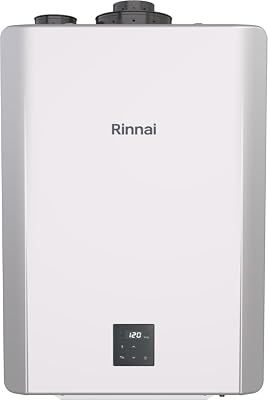 Rinnai RX199iNRinnai RX199iN
A gas-equipped home with a supported winter load and a complete condensing installation plan.
- Natural gas or propane configuration
- Condensing gas heating
- Outdoor installation requires the RX-OVC accessory
Keep in mind: A condensate route and the correct vent or outdoor kit are part of the job.
View on AmazonRead our analysis - 2Indoor natural gas
 Rheem RTG-70DVLN-3Rheem RTG-70DVLN-3
A natural-gas project with a supported winter load and an approved indoor vent route.
- Natural gas fuel
- Indoor installation
- Non-condensing RTG family
Keep in mind: An old tank heater's flue is not automatically suitable for this model.
View on AmazonRead our analysis - 3Concentric-vent gas
 Noritz NR83DVCNGNoritz NR83DVCNG
A natural-gas project suited to the NR83DVC indoor concentric vent system.
- Natural gas model
- Indoor concentric vent
- Non-condensing NR family
Keep in mind: Its venting needs should not be confused with those of condensing Noritz models.
View on AmazonRead our analysis
For the best gas tankless water heater, start with winter flow and the fuel supply. The tankless water heater gas supply must be checked with the other loads. Then check where the unit can go. These three picks compare a condensing option with two non-condensing indoor models. None is a blanket replacement for every gas tank heater.
#1. Rinnai RX199iN: a flexible condensing layout
Rinnai RX199iN Rinnai RX199iN
Our verdict:
Flexible gas layout
Gas-equipped homes comparing a condensing installation indoors or outdoors.
- Natural gas or propane configuration
- Condensing gas heating
- Outdoor installation requires the RX-OVC accessory
Keep in mind: A condensate route and the correct vent or outdoor kit are part of the job.
View on AmazonThe RX199iN is a condensing gas model that can be set up for natural gas or propane. It offers an indoor route, while outdoor use needs the RX-OVC kit. That flexibility can help when comparing locations. It does not mean every wall is a permitted position or that the bare heater includes every accessory needed for the project.
Start by asking which route is actually being quoted. An indoor proposal needs the approved vent system and combustion-air arrangement. A condensing layout also needs a condensate drain. An outdoor proposal must include the required kit and comply with the outdoor instructions. The heater-only cost does not describe either completed job.
This is a useful candidate when the water load fits and the site supports the work. Compare its flow at the winter temperature rise. Do not assume that choosing a larger gas input will make every tap deliver its full desired flow. The flow table still sets the water-side limit. The home's fuel system must also be designed to supply the unit with its other gas loads.
The trade-off is the amount of site planning hidden by a compact case. Drain routing can affect location. A long or awkward vent route can affect the full scope. A convenient exterior wall can fail a clearance check. Confirm those details before placing an order, so the model's range of options becomes a real plan rather than an assumption.
#2. Rheem RTG-70DVLN-3: indoor non-condensing natural gas
Rheem RTG-70DVLN-3 Rheem RTG-70DVLN-3
Our verdict:
Indoor natural gas
An indoor natural-gas project with a verified manufacturer-approved vent route.
- Natural gas fuel
- Indoor installation
- Non-condensing RTG family
Keep in mind: An old tank heater's flue is not automatically suitable for this model.
View on AmazonThe RTG-70DVLN-3 belongs to Rheem's indoor non-condensing RTG range. The full model name matters. Nearby product names can refer to a different fuel or an outdoor version. Put the complete suffix on the quote and the equipment order. A photograph or a short brand-and-range label does not settle those choices.
Assess it where the winter flow meets demand and its specified vent arrangement suits the home. Do not assume that the vent from a previous tank heater can simply be reused. The type of appliance and its instructions govern that work. A licensed installer must confirm the full route and termination for this exact model.
As a non-condensing choice, it changes the installation questions compared with the RX199iN. It is not automatically the simpler or less costly completed job. A difficult vent route can outweigh a difference in equipment cost. Compare the actual work at your site, with the same water load and the same standard of service access.
This model is a conditional option for a measured demand. Keep its maximum advertised flow tied to the required rise. A home with colder inlet water may get less flow at the chosen outlet temperature. If the quote relies on a bathroom count alone, ask for the sizing inputs and the table used to support the choice.
#3. Noritz NR83DVCNG: concentric-vent natural gas
Noritz NR83DVCNG Noritz NR83DVCNG
Our verdict:
Concentric-vent gas
A natural-gas project suited to the NR83DVC concentric vent arrangement.
- Natural gas model
- Indoor concentric vent
- Non-condensing NR family
Keep in mind: Its venting needs should not be confused with those of condensing Noritz models.
View on AmazonThe NR83DVCNG is an indoor natural-gas model with a concentric vent. The full NR83DVC name matters. Other Noritz ranges can use a different heat exchanger or vent. Read this model's own documents. A claim about another range does not establish what this one needs.
This is a non-condensing heater. Use its own data sheet and manual to assess the location. Compare winter flow with the taps that must run together. Keep the conditions beside any maximum flow figure. Without them, it cannot show whether the model will meet the morning peak.
This pick is worth assessing when the prescribed vent layout works and local service support is practical. Ask who will maintain it and where the isolation points will go. A neat installation that blocks cover removal is a poor long-term layout. The water connections, vent and access space must all work together.
Factors to consider: tankless water heater gas supply and site
Begin with the water load
Write down the fixtures used during a normal busy period. Separate those that must run together from those that can wait. A household that fills a bath after showers has a different peak from one that needs both at the same time. The heater should be sized for an agreed use pattern, not a convenient one that nobody intends to follow.
Measure flow where possible. At mixed-water fixtures, keep total flow separate from the hot side served by the heater. Record the conditions used for the estimate. If a fixture's specification is used instead of a measurement, retain that basis too. Clear inputs make it possible to understand why one model fits and another does not.
Our tankless sizing calculator estimates the heating duty from flow and temperature rise. It gives you a useful screening result before you compare model tables. The result is not a gas-line design or a product approval. Take the inputs, not just the final number, into the equipment discussion. That lets the installer check the same water load.
Keep an occasional peak separate from the routine load. You may choose to accept a slower bath fill when guests stay, while still requiring normal shower flow every morning. Those are different service goals. Describing them plainly is more useful than asking for an undefined amount of continuous hot water.
Use winter inlet water and a stated outlet target
The heater must add heat to the water entering it at that time. Cold winter water needs more heat per gallon than warm summer water. Use a supported inlet condition for the home. An outdoor air average or a summer tap reading is not the same input. Keep a range when the winter water temperature has not been measured.
Temperature rise is the gap between inlet water and the chosen outlet target. A maximum GPM figure usually belongs to a stated rise. Compare every model at the rise the home needs. If one listing uses warmer inlet water, its larger flow does not prove greater capacity under your winter conditions.
Keep the outlet target fixed for each model. Changing it to make one heater seem to fit gives a poor comparison. Hotter water can also raise scald risk. Any mixing controls belong to the whole system design. Follow the unit's safe-use guidance rather than changing a safe household setting to rescue a sizing result.
Ask for the sizing table used in the quote. Keep that page with the model and the water inputs. If the model changes, repeat the check. A nearby size or similar suffix is not always an equal replacement. The first check only covers the unit and conditions that were assessed.
Confirm the gas supply with all loads included
A gas connection at the wall does not establish enough capacity for a new tankless heater. The prior appliance may have had a different input. Other gas loads may run at the same time. The full system, including the meter or propane arrangement as applicable, must be assessed for the proposed unit by the licensed trade.
Do not choose a pipe size from the heater's maximum input alone. The installation depends on the actual route and the rest of the system. This comparison gives no pipe or regulator prescription. The gas-line planning guide explains which details belong in that assessment and why a short connection is not the whole gas system.
Keep fuel configuration explicit. Natural gas and propane are separate supply choices. A model that allows conversion still requires the approved procedure and parts, if specified. Do not infer conversion permission from a brand name or a similar-looking listing. The exact unit and the intended fuel must agree before the work starts.
Ask the quote to identify any gas-supply changes. An unknown allowance remains unknown until that work is defined. Equipment cost should not be treated as the whole project total. A lower heater price can be outweighed by a supply upgrade, while a more costly unit can still be a poor choice if it does not fit the water load.
Separate condensing and non-condensing layouts
Condensing equipment recovers more heat from the exhaust and produces condensate that needs a permitted disposal route. That drain is part of the installation. Ask where it goes and what treatment or protection the site needs. Do not assume an outdoor location removes the need for a drain plan or that the nearest opening is a suitable destination.
Non-condensing equipment has different exhaust and vent requirements. It does not mean the old tank heater's flue can remain unchanged. Read the exact model's approved materials and layout limits. A comparison based only on whether a model condenses leaves out the route that will actually be built at the property.
The condensing guide explains the two types. Then assess each model on its own documents. Check the vent length and fittings, as well as where the vent ends. A broad claim about one type does not settle that route. Put those details in the work scope.
Do not route exhaust by trial and error. Gas combustion work belongs to a licensed installer following the manufacturer and applicable code. A seller diagram may show one valid arrangement while leaving out the limits relevant to your home. The complete route needs to be confirmed before the unit is mounted, not improvised once a hole has been made.
Check indoor and outdoor positions as distinct projects
An indoor position needs the specified vent and combustion-air arrangement. An outdoor position needs exact model approval or the required outdoor kit. Neither choice is established by the word tankless. A unit in a seller's exterior photograph may include parts not supplied with the bare model. Confirm the package and instructions before ordering.
Check clearances from openings and nearby features against the exact manual. Do not invent a cabinet or recess to conceal the unit. A tidy cover can interfere with airflow or exhaust. If the chosen wall does not work, compare another location or another heater. The easiest pipe route is not always an allowed combustion layout.
Cold inlet capacity and freeze protection are separate issues. A unit can be large enough for the water load while exposed plumbing remains at risk. Read what the heater's own protection covers and what conditions it needs. Plan the connected pipes and valves too, including periods without normal power or heat. A single cabinet feature is not a whole-site winter strategy.
Leave a practical route for future service. The cover and isolation points should remain reachable after storage is placed nearby. Ask how routine care will be performed. A wall that looks clear on installation day can become hard to reach later. Keep the service space as part of the home's ongoing layout.
Plan water quality and service before the unit is fitted
Check the water against the maker's limits. Treatment should address measured conditions, rather than a general assumption that every house needs the same accessory. Hardness is not the same as visible dirt, and a general filter does not prove that scale has been addressed. Ask which water test or supply information supports the proposed treatment.
Use the exact model's care procedure. A flushing routine for one range is not automatically right for every gas heater. Keep safe isolation and service work with the qualified trade where required. Ask who will do routine maintenance and what access they need. Service planning is more useful before the unit is boxed into a tight space than after a fault appears.
Read the warranty as separate coverage categories. Heat-exchanger, parts and labor terms may differ. Conditions can depend on installation and use, so retain the documents and proof of the work. A headline period is not a promise that all repairs are covered for the same time. It is also not an estimate of how long the heater will last.
Ask about local service support without treating it as a product score. A model with useful controls still needs parts and a practical repair route. Keep the exact identity on every document so later service is based on the right unit. If the quote changes models, check support and maintenance needs again as well as the water and gas load.
Treat recirculation as a separate plumbing choice
Water already sitting in a long pipe does not become hot because the heater has a larger burner. Waiting time at a remote tap is a distribution issue as well as a heater issue. A return loop can address that path in a suitable system. It needs compatible plumbing and controls, rather than a promise of instant hot water from a model name.
Check whether a pump comes with the unit or must be added. Those are different packages. The home still needs the correct return path. Keep the pump and controls in the scope along with that path. The return-loop guide explains what to settle before buying parts.
Do not confuse recirculation convenience with heating capacity. A pump can move water through a planned path; it does not increase the heat available for showers. The essential winter load still needs to fit the unit. Assess the waiting-time goal and the simultaneous-use goal separately so an improvement to one does not hide a shortfall in the other.
Make quotes describe the same completed job
Start each comparison with the same water-load record and proposed location. Ask for the exact heater model and fuel. The scope should state the gas work and vent or outdoor kit, with condensate work where applicable. Keep water connections and service access visible too. If a required item is absent, ask whether it is included elsewhere or still unresolved.
Compare the two scopes before comparing their totals. A heater-only quote and a completed installation are different offers. A low figure can leave expensive work outside the line items. Keep open items beside the quoted amount rather than filling them with a guessed zero. That gives you a fair basis for deciding whether one proposal offers a real advantage.
For a simple decision check, imagine the home's busiest morning. Name the taps in use, then point to the flow table that supports them. Next, point to the gas assessment and the agreed location. If those pieces do not refer to the same model, the proposal is not yet complete. Resolve the mismatch before the equipment order becomes a constraint on the work.
Keep optional features separate from required work. Remote controls and a recirculation plan can be useful, but they should not obscure a missing vent or an unconfirmed supply. Choose the essential fit first. Then decide which controls solve a real household problem and which would add cost without changing the result that matters to you.
How We Picked
We used current US maker data and exact catalog checks for the three models. We have not installed the heaters or run flow or burner trials. The choices show different supported layouts. They do not rank brands by customer stars or an invented score. Each one still needs to fit the home.
The assessment asks which constraints each option creates. The RX199iN needs a complete condensing plan. The RTG-70DVLN-3 and NR83DVCNG need their own non-condensing vent arrangements. All need a supported winter water load and a gas system that can supply them. A feature is treated as a benefit only when it is useful within those limits.
Verdict: tankless water heater gas and site checks
The best gas tankless water heater meets the water duty on a confirmed fuel system. Have the tankless water heater gas supply checked for the exact unit. Start with the RX199iN for a condensing project. Assess the Rheem and Noritz indoor units where their own vent layouts fit. Confirm the full model and work scope before placing an order.
Return to the heater selection guide if fuel choice remains open. Electric tankless needs enough spare power. A storage system changes how heat is delivered over time. Compare each option with the same household demand. Choose one that meets it with a supported and practical plan for the home.
Sources: Rinnai RX199iN, Rheem RTG-70DVLN-3, and Noritz NR83DVC product information. Published documents checked October 16, 2026.
Related guides
Quick answers
Is a tankless gas water heater better?
It can be suitable where the winter flow and complete gas project fit the home. The choice also needs an approved vent or outdoor layout. Compare the full scope with other water-heating arrangements rather than infer an advantage from the tankless label alone.
Is Rheem or Rinnai better?
Use exact models and the same water conditions. The RX199iN is condensing, while the RTG model here is non-condensing indoor natural gas. The vent and drain work differ. Compare supported flow and the completed installation before choosing between them.
What is the most reliable tankless hot water heater?
Catalog specifications do not rank reliability. This guide compares documented equipment and installation fit. Plan service and water-quality care from the exact manual, and read warranty conditions without treating a stated period as a promise of lifespan.