
Heater choices
3 Best Tankless Water Heaters with Recirculating Pumps in 2026
As an Amazon Associate, this website earns from qualifying purchases.
The short answer
Compare the pump-equipped RXP199iN and RXP160iN with the outdoor REP199eN. Confirm the return path and winter capacity before choosing.
Sections7
- #1. Rinnai RXP199iN: pump-equipped condensing gas
- #2. Rinnai RXP160iN: a lower-output pump-equipped option
- #3. Rinnai REP199eN: outdoor non-condensing natural gas
- Factors to consider: a tankless water heater with a recirculating pump
- How We Picked
- Verdict: a tankless water heater with a recirculating pump
- Related guides
Our top 3 picks
- 1Condensing return-loop plan
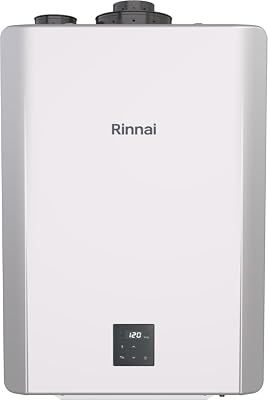 Rinnai RXP199iNRinnai RXP199iN
A supported gas project with a confirmed return path and control arrangement.
- Integrated recirculation pump
- Natural gas or propane configuration
- Condensing gas heating
Keep in mind: An included pump does not create a return line through the home.
View on AmazonRead our analysis - 2Limited load with pump
 Rinnai RXP160iNRinnai RXP160iN
A measured water load that fits this model, with a compatible return path.
- Integrated recirculation pump
- Smart Sense gas controls
- Residential condensing model
Keep in mind: The pump does not make its heating capacity equal to a larger model.
View on AmazonRead our analysis - 3Outdoor pump-equipped gas
 Rinnai REP199eNRinnai REP199eN
An approved outdoor natural-gas project with a compatible recirculation path.
- Outdoor natural-gas model
- Non-condensing heating
- Built-in recirculation pump
Keep in mind: The outdoor location and non-condensing design bring different requirements from the RXP models.
View on AmazonRead our analysis
The best tankless water heater with a recirculating pump must fit the home's return path. It must also meet the winter water load. These three Rinnai models have built-in pumps. A pump can move water through an approved loop, but it cannot create missing plumbing or add heat output. Confirm the whole system before ordering.
#1. Rinnai RXP199iN: pump-equipped condensing gas
Rinnai RXP199iN Rinnai RXP199iN
Our verdict:
Condensing return-loop plan
A planned recirculation system with a confirmed return path and control arrangement.
- Integrated recirculation pump
- Natural gas or propane configuration
- Condensing gas heating
Keep in mind: An included pump does not create a return line through the home.
View on AmazonThe RXP199iN combines a condensing gas heater with an integrated pump. It can be configured for natural gas or propane. Check the required fuel setup on the exact unit and keep it in the quote. A shared gas connection does not establish the configuration or prove that the supply supports the heater with the home's other loads.
This is a candidate when both the winter flow and the proposed loop fit. Indoor use needs the approved vent plan. Outdoor use needs the right kit and an allowed location. The unit also needs a condensate route. Keep that work in the scope beside the return loop, rather than compare heater-only packages.
Do not read the built-in pump as proof of instant hot water at every tap. The loop route and any branches beyond it affect the result. Ask which fixtures the proposed arrangement serves and how the controls operate it. A useful return-loop plan names the plumbing path; it does not end at the pump inside the heater.
#2. Rinnai RXP160iN: a lower-output pump-equipped option
Rinnai RXP160iN Rinnai RXP160iN
Our verdict:
Limited load with pump
A measured load below the larger RXP model’s capacity where recirculation is still useful.
- Integrated recirculation pump
- Smart Sense gas controls
- Residential condensing model
Keep in mind: The pump does not make its heating capacity equal to a larger model.
View on AmazonThe RXP160iN offers a pump-equipped condensing choice for a load supported by its own table. Compare it with the larger RXP model under the same inlet and outlet conditions. A similar cabinet and shared control family do not mean the same hot-water flow. The return loop and the heating task are separate sizing questions.
This can be worth assessing when the usual demand fits and the home needs a planned return system. A larger heater is not required simply because a remote tap is slow to warm. More burner capacity does not remove cold water already sitting in a long pipe. Define the waiting-time problem before choosing a size to solve it.
Check the full package as closely as the heating table. Confirm the allowed location and fuel setup. Then check which parts the planned return path needs. A smaller heater-only price is not enough to compare completed jobs. Define the gas and vent work, with the condensate route, as well as the loop and controls.
#3. Rinnai REP199eN: outdoor non-condensing natural gas
Rinnai REP199eN Rinnai REP199eN
Our verdict:
Outdoor pump-equipped gas
Best for an approved outdoor natural-gas project with a compatible recirculation path.
- Outdoor natural-gas model
- Non-condensing heating
- Built-in recirculation pump
Keep in mind: The outdoor location and non-condensing design bring different requirements from the RXP models.
View on AmazonThe REP199eN is an outdoor natural-gas choice with a built-in pump. Its site needs differ from the condensing RXP models. Keep the full suffix when ordering. A similar RE name does not prove that a pump comes with it. A different fuel version is not the same order either.
Assess it where the outdoor position is allowed and the winter flow meets the load. Check the actual openings and features near the proposed wall against the manual. Do not invent an enclosure to make the unit look tidier. The approved airflow and exhaust arrangement have to remain clear in daily use.
Freeze planning also needs attention outside. Read the conditions of the unit's own protection and plan for the connected pipes and valves. A built-in pump is not a whole-site freeze strategy. Keep normal operation separate from the plan for a vacant home or a power interruption. Follow the exact model's instructions for those cases.
Factors to consider: a tankless water heater with a recirculating pump
Confirm the actual return path
Start by tracing the proposed loop. A return line is a physical route through the plumbing. An approved crossover layout has different needs. Neither is proved by the heater's ability to use a loop. Have the installer name the actual path and the approved parts that make it work.
Ask which taps benefit from that route and which branches remain outside it. A long branch beyond the loop can still hold cooled water. A promise about every tap needs support from the home's layout. Draw the route on the plan so its limits are clear. That is more useful than a general claim that the heater gives instant hot water.
Keep included equipment separate from compatible equipment. The pump may be built in while valves, controls or other parts still need to be supplied. Confirm the exact package. An accessory shown in a photograph is not proof that it arrives in the box. The quote should identify any required parts that remain outside the heater order.
Choose controls for how the home is used
The loop needs a control plan, not just a pump. Ask when the system runs and what calls for circulation. Match the approved controls to the household's use pattern. A system intended to reduce a morning wait has a different goal from one that is expected to keep a long route ready throughout the day.
One control feature may not work with every plumbing layout. Use the exact model's manual and approved parts. Put any required sensor or control locations in the scope. Check them before the work starts. The return-loop guide helps separate the path, pump and controls before you choose equipment.
Comfort and energy use should be assessed separately. A loop can reduce water run while waiting, but moving and maintaining hot water around a route can use energy. The result depends on the layout and control pattern. We do not infer a bill saving from the presence of a pump or claim a payback period without the home's actual use and rates.
Check heating capacity independently
The pump does not increase heat output. List the taps that must run together and use a supported winter inlet condition. Then compare the exact heater table at the required rise. Our sizing calculator helps record that water load. A return-loop feature should not be used to cover a heater that cannot meet the essential draw.
Keep waiting time separate from simultaneous flow. If water arrives slowly at a distant sink but the heater meets the load once it arrives, the route may be the main issue. If showers cool when several fixtures run, the heating duty needs its own check. Those symptoms can lead to different work, so describe them clearly rather than asking for a larger heater by default.
Include service and the full installation
Leave access to the heater and loop components. The pump is another part that must remain serviceable. Ask how isolation and routine care will be carried out. Check water-quality limits against measured conditions. Treatment should address the actual water supply, rather than assume any general filter deals with hardness or scale.
Read warranty terms for the intended use. Coverage can have conditions that matter to a return-loop installation. Keep the exact model and operating arrangement with the purchase records. A warranty period does not establish lifespan. Compare the full gas and plumbing scope before using the heater-only price to settle the model choice.
Ask for a simple handover record that shows the loop on the home's plan. Mark which taps it serves and where the controls are. Keep the model manual with it. A later owner should be able to understand the intended route without guessing from the pipes at the heater. That record also helps a service visit begin with the right system description.
If the home already has a suitable heater, first establish whether the goal requires a new one. Waiting at a remote tap alone does not prove that the heating unit needs replacement. Any added pump arrangement must still be approved for the existing model. Compare that scope with a new pump-equipped heater rather than assume that the larger purchase is the only route.
Keep the promised outcome clear in the proposal. Name the fixtures served and the agreed control pattern. Ask how the installer will show that the completed system follows that plan. Avoid a vague promise about every tap or an exact waiting time that has not been established for the home. A practical handover checks the agreed route and explains normal operation.
How We Picked
We checked exact catalog records and Rinnai's US product pages for models with pumps. We have not installed the units or timed hot water at a tap. The comparison keeps heat output separate from the return-loop goal. It requires an allowed location and a real plumbing path. It promises neither instant hot water nor a bill saving.
Verdict: a tankless water heater with a recirculating pump
A tankless water heater with a recirculating pump needs a compatible system. Compare RXP199iN and RXP160iN for condensing projects. Consider REP199eN for an allowed outdoor natural-gas layout. Confirm the return path and controls, then check winter heat output. Buy the planned system rather than treat the included pump as the complete solution.
Sources: Rinnai RXP199iN, Rinnai RXP160iN, and Rinnai REP199eN. Published documents checked October 16, 2026.
Related guides
Quick answers
What does a recirculating pump do for a water heater?
It moves water through an approved return path to address waiting time at the fixtures served by that loop. The route and controls affect the result. A pump does not create a missing line or increase the heater's output for simultaneous draws.
What tankless water heater do I need?
Start with winter inlet water and the taps that must run together. Compare the exact model table with that load, then confirm fuel supply and location. A pump-equipped model adds a separate requirement: a compatible return path and control arrangement.
Can I use a recirculation pump with an on demand water heater?
Only in a model-approved arrangement with the required plumbing and controls. Distinguish an integrated pump from an optional or external one. Check which parts the package includes; a recirculation-capable listing is not proof that a full loop exists in the home.
Should a tankless water heater be flushed every year?
Use the exact manufacturer's service instructions and the actual water conditions to establish the care schedule. Do not apply one interval to every unit or water supply. Keep service access and any model-specific return-loop conditions in the maintenance plan.