
Operation and ownership
Drain water heat recovery
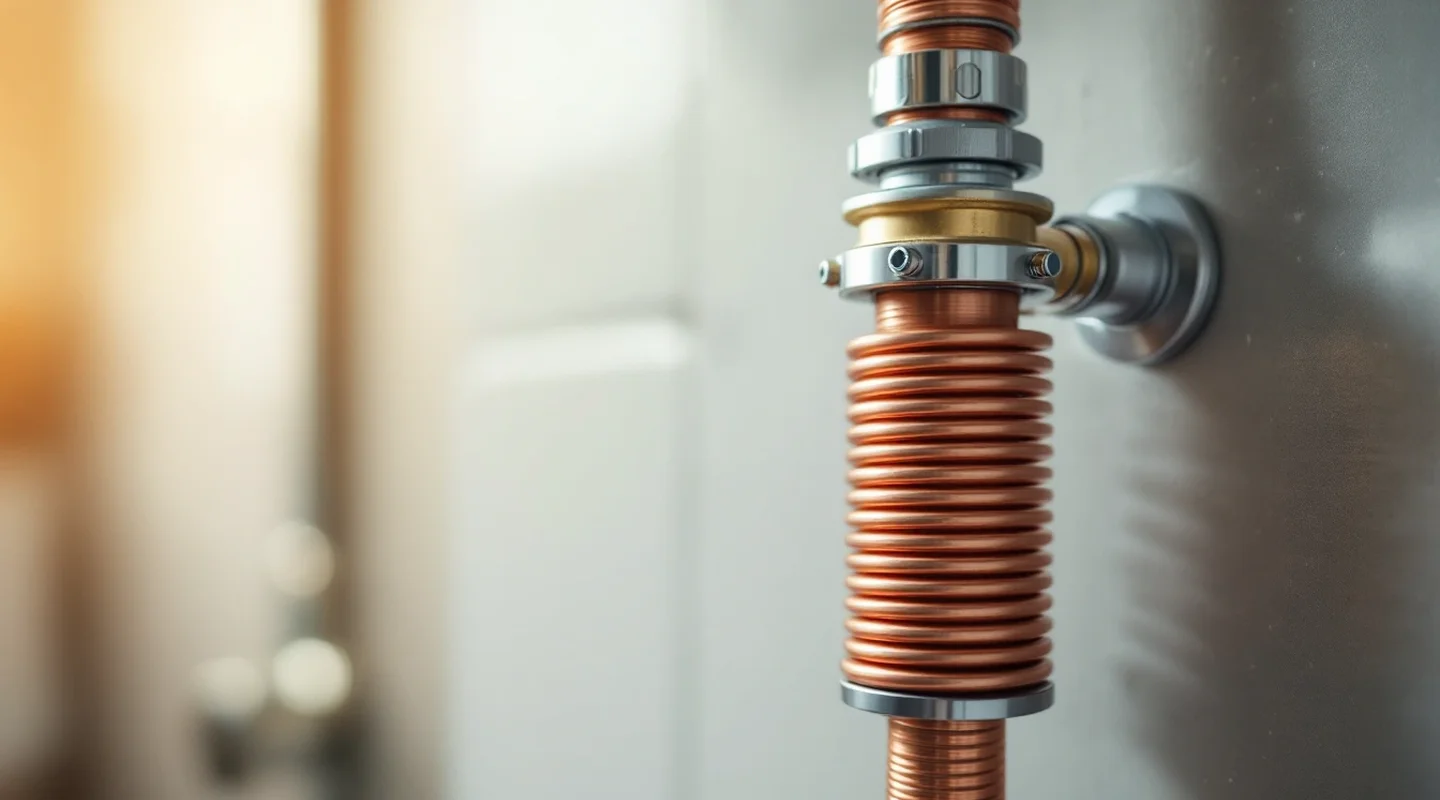
Drain water heat recovery transfers heat from used warm water to fresh cold water before it reaches the water heater.
Sections6
Drain water heat recovery transfers heat from used warm water to fresh cold water before it reaches the water heater.
How drain water heat recovery works
A drain water heat exchanger sits in the path of warm water leaving a fixture. Fresh cold water flows through a separate passage against the warm drain pipe. Heat moves through the wall between them. The warmed supply can then go to the water heater, a fixture, or both, depending on the plumbing layout.
Used water keeps flowing toward the sewer or septic system.
A common home design uses a vertical drain section with a fresh water coil around it, as shown in Natural Resources Canada's 2016 Manitoba housing guide. A plumber can check whether a suitable section of drain and a route for the supply pipe are available.
The tankless water heater guide explains how a heater meets a flowing demand. Recovery is an added part of the plumbing system.
Why showers are a good match
A shower draws fresh water while warm water runs down the drain. Those two flows overlap, so a simple exchanger can transfer heat during the shower. The guide reports the manufacturer's view that the devices are more effective when hot water use and drainage happen at the same time.
Some systems use thermal storage tanks for wastewater heat recovery, according to a Natural Resources Canada fact sheet.
A bath has a different pattern. It may be filled first and emptied later. If no fresh water flows through a basic exchanger during the drain, there is little opportunity to transfer heat at that moment. A clothes washer can also have separate fill and drain periods. Check the actual timing before counting those uses in a savings estimate.
A shower on another branch may bypass the exchanger. A basement shower may drain below the only practical spot for a vertical unit. Trace the pipes before assuming every shower will contribute.
Check the plumbing before getting a quote
- Find the warm drain. Trace the shower drain to the vertical stack and identify which fixtures feed it. A finished wall or ceiling may hide part of the route.
- Measure the available space. Ask a plumber to measure the straight section, connections and access around it. The unit must fit the actual pipe and the planned work area.
- Trace the cold supply. Find a practical route from the supply to the exchanger and onward to the intended heater or fixture. Record any walls or floors that must be opened and repaired.
- Check the layout and rules. Have the plumber confirm the chosen unit, orientation, potable-water protection, permits and local plumbing requirements. Ask how the work will be inspected and tested for leaks.
- Ask for a complete scope. Include the exchanger, fittings, labor, access work, inspection and any finish repairs. Note work excluded from the quote.
In the Manitoba trial described in the guide, shower drains were joined to one stack and the unit preheated the cold supply to a storage water heater. That is one workable layout. The best route depends on what can be reached and what the local authority accepts.
If the house has several stacks, ask which showers each one carries and what it would cost to connect them. A second exchanger or extra pipe work may recover more heat but adds to the project cost. Compare the added cost with the added use it would serve before choosing.
Fit the exchanger to a tankless heater
In a compatible layout, warmer inlet water would reduce the temperature rise the tankless heater must supply. Treat that as a planning estimate: inlet temperature changes with use.
Keep the heater's operating range and supply pressure in the plan. Ask the installer to check the exact heater and exchanger documents together, including allowable inlet conditions and pressure loss.
Do not size the heater on the assumption that recovered heat is always present. A kitchen tap may run when no warm water is draining through the unit. Use the tankless sizing guide to check the flow and temperature rise for that case as well as the shower case.
Estimate savings and payback
None of the sources used on this page prints a payback range for this system. Work the payback from your quote with the steps below. None of the sources used on this page prints a unit price for this system. A useful estimate needs a complete installed price and an estimate of the energy the particular layout will save.
Use these steps to compare a quote:
- Record the installed cost after any confirmed incentive. Keep the incentive rules and expiry with the quote.
- Estimate annual energy saved for the showers and other draws that actually pass through the unit. Keep the assumed flow, water temperatures and use pattern with the estimate.
- Apply the relevant local energy rate. Subtract any added yearly operating or service cost to find the net annual saving.
- Divide installed cost by positive net annual saving. The result is simple payback in years. If the net saving is zero or negative, there is no positive simple payback.
For example, assume a project costs $1,200 after a confirmed incentive and saves a net $100 a year. Those are made-up inputs for this calculation. Dividing $1,200 by $100 gives a simple payback of 12 years. This method leaves out financing, future rate changes and the time value of money.
The energy savings guide explains how to compare running costs and first costs for a heater choice. Keep the exchanger's added cost and savings separate from the heater comparison so neither is counted twice.
Compare a home unit with a building system
A home exchanger often serves a nearby shower drain and supply route. A building system needs a design suited to its own flow pattern.
For either scale, identify the warm-water source, the fresh-water destination and when each flows. Ask the designer to show the connection between the claimed savings and those operating hours.
After installation, keep the model details, drawings and inspection record. Ask who will handle any future leak or blockage and how to reach the unit without damaging finished surfaces. This record also helps the next owner understand which pipes and fixtures the system serves.
Quick answers
Can drain water heat recovery make hot water by itself?
No. The water heater supplies the remaining heat.
Does it recover heat when a bathtub empties?
See the shower and bath comparison above.
Does the system filter or reuse wastewater?
No. The two water streams stay separate.
Is drain water heat recovery the same as a condensing heater?
No. They recover heat from different sources; compare heater types in the tankless water heater guide.